
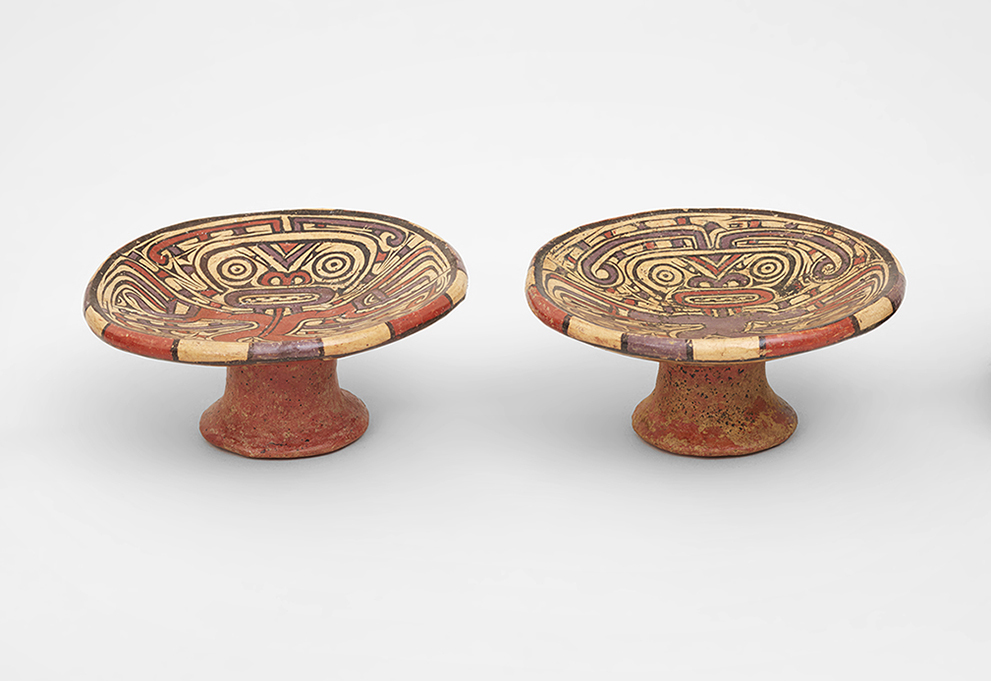
Gran Coclé is an archaeological culture area of the so-called Intermediate Area in pre-Hispanic Central America, largely coinciding with the modern-day Panamanian province of Coclé and encompassing several identifiable indigenous cultures. Coclé’s distinct artistic style is found expressed on a variety of vessels with bold colors and strong structural designs. Coclé motifs often include fantastic beasts, amalgams of different animals.
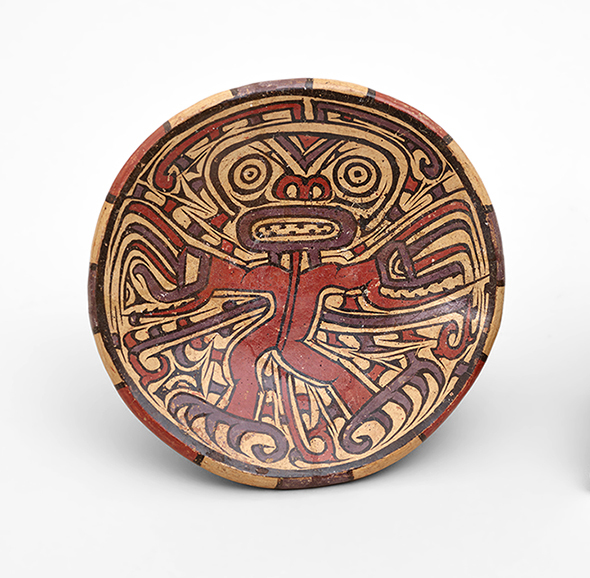
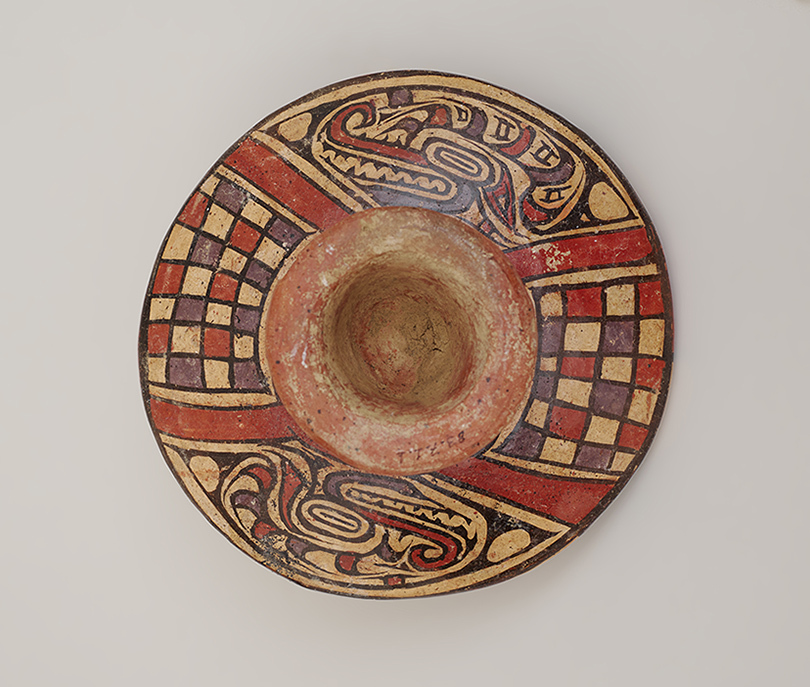
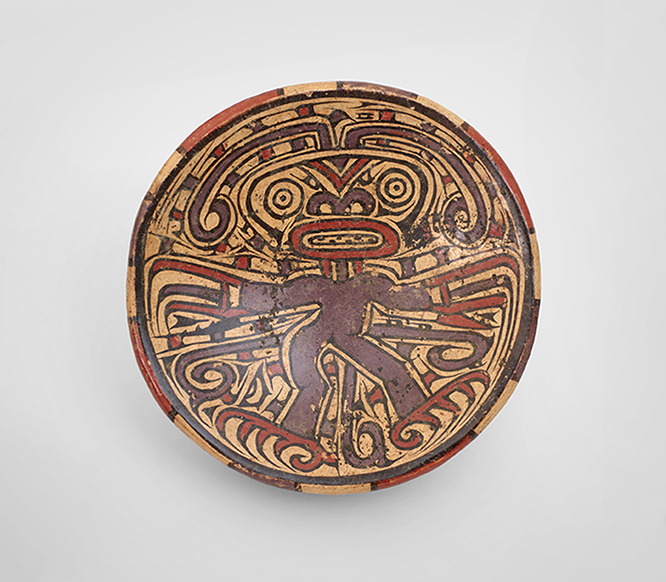
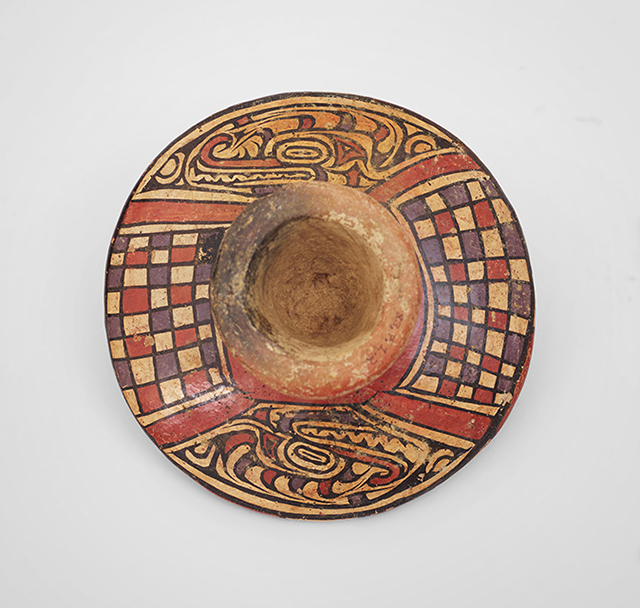
This pair of shallow concave plates rest on flaring pedestal bases. Finely and intricately painted in cream, red, and purple, the two plates appear nearly identical but display opposing color schemes. Each features an elaborate and fantastic dancer in the center—an “alligator god” with crocodilian, feline, and avian characteristics—one with a purple body, and the other with a red one. On the reverse, paired crocodile or dragon heads in profile alternate with checkerboard patterns. The use of these plates as part of ritual burial offerings is unknown. Perhaps the fearsome nature of the creatures marks them as protectors in the spirit world of the afterlife.